


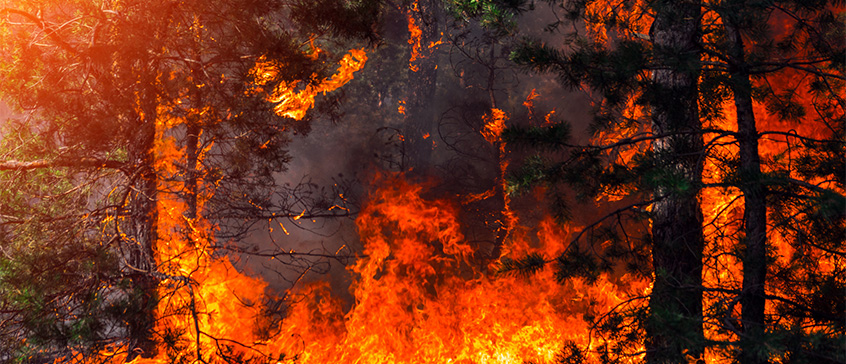
Fire Ecology
Code: ER337
Apply this course towards:
Restoration of Natural Systems – Certificate,
Restoration of Natural Systems – Diploma
Course description
This course examines the ecological role of fire and its application in ecosystem restoration and landscape management. Topics include fire behaviour and fuels, fire effects on vegetation and ecosystems, fire regimes and their reconstruction, prescribed burning, restoration of burned landscapes, and wildland–urban interface management. Students explore relationships among fire, climate, biodiversity, watersheds, and changing wildfire patterns. The course incorporates examples from British Columbia and western Canada, Indigenous perspectives on fire stewardship, and practical approaches to fuel management and wildfire risk reduction. Through lectures, guest presentations, case studies, videos, and a field trip, students develop an understanding of how fire can function as both a natural ecosystem process and a tool for ecological restoration. Emphasis is placed on integrating ecological knowledge with practical restoration and fire-management strategies.
Format
This course will be offered in a 5-day Field course format.
Learning objectives
Upon successful completion of this course, you will be able to:
- Explain the ecological role of fire and key concepts associated with fire behaviour, severity, frequency, and fire regimes.
- Evaluate the effects of fire on vegetation, soils, wildlife, watersheds, and ecosystem processes.
- Interpret evidence used to reconstruct historical fire regimes, including tree rings, fire scars, charcoal, climate data, and stand characteristics.
- Assess the application of prescribed fire, fuel management, and other fire-management practices in ecological restoration.
- Develop evidence-based approaches to fire-related restoration and wildfire-risk management that consider climate change, biodiversity, Indigenous perspectives, and wildland–urban interface conditions.
Prerequisites
Acceptance to the RNS program or a combination of work and/or education experience equivalent to third-year standing.
- If you’re not currently enrolled in the Restoration of Natural Systems (RNS) program, including UVic and Letter of Permission students from RRU and TRU, you must obtain approval from the Program Coordinator (tusas@uvic.ca) before registering.
Registration details
Select your offering:
You have already registered for this course.
This item is already in your shop cart.
You're already on the waiting list for this item.
Sorry, this section is full.
Online registration temporarily unavailable
Sorry, this course is not available for registration at this time.
This course is in progress. Please contact us for more details.
Online registration is closed for this course. You may still be able to register by phone. Call 250-472-4747 to find out.
This course is on your wish list. You will be notified when this course becomes available.
Want to receive notification when this course becomes available?
{{ loggedIn ? 'Add to wish list' : 'Sign in/create a new account to add to wish list' }}Info you should know: